


Finding tree roots in pipes can leave a homeowner wondering who should actually pay for the repair. Is it him, his neighbour, the council, or Sydney Water?
The general rule in NSW is fairly simple: property owners are typically responsible for maintaining and repairing pipes they own, even when a neighbour's tree roots have entered the line. The position can change in particular circumstances, especially where you can demonstrate negligence or damage caused by a neighbouring tree.
The Rule in One Sentence
Tree roots cause nearly two-thirds of sewer blockages. The property owner must maintain their own drain, and a tree owner is only held liable in narrow circumstances because tree roots merely exploit sewer pipes that were already leaking nutrients and water. Here is a general rule: If a tree root enters your pipe, the law presumes your pipe was already cracked or leaking. Therefore, the pipe owner bears the cost of repair in almost all scenarios.
Your Tree, Your Pipe
The simplest circumstances: your tree, your sewer pipes, your blockage. The roots are yours to fix, and the question is which fix is worth paying for.
Cutting roots clears the blockage and restores flow; for a while. Most tree species regrow into the same sewer line within six to eighteen months, because the crack or joint that let roots in the first time is still there. Repeated root cuts are costly without resolution.
Pipe relining Sydney seals that entry point permanently. An epoxy liner is cured inside the damaged pipes, closing the joint the roots used and leaving a smooth, root-resistant inner surface. The tree can stay; the sewer blockages stop. Cutting down the tree stops future growth, but removing the stump alone rarely solves the immediate problem. Dead roots inside the line will continue to trap debris, and existing damaged pipes will still attract roots from other nearby plants. For immediate clearing, you will need professional tree root removal from drains.
The Neighbour's Tree, Your Pipe
This is the scenario most people expect to be straightforward and find isn't. If your neighbour's tree roots have crossed the property boundary and blocked your sewer line, your first question is usually "can I make them pay?" The honest answer under NSW law is: probably not without demonstrating negligence or an unreasonable failure to act after formal notice.
The general rule is that you're entitled to cut roots at the property boundary, at your own cost and without damaging the tree itself. You can write formally to your neighbour requiring them to address the tree root intrusion and attaching CCTV inspection footage showing the root location and extent of damage caused. If the neighbour refuses to act and the damage continues, a nuisance claim is possible, but you'd need to demonstrate negligence or that the neighbour had prior knowledge and failed to act in a reasonable manner. The Dividing Fences Act covers fences; it doesn't cover roots in the ground.
What actually works in most cases: send the letter, share the CCTV drain inspection footage, propose a shared fix. Many neighbours pay their share voluntarily once they see the evidence and understand their tree caused the damage. Without that footage, there's nothing concrete to assess.
If a dispute escalates, legal aid or the NSW Civil and Administrative Tribunal are options, but confirm the evidence trail is solid before going that route.
Council Street Trees
It is common for roots from council trees growing on the nature strip or a public park to find their way into private drain lines.
When dealing with a local council, the process requires strict documentation:
- Report First: Contact your local municipality the moment you suspect council trees are impacting your lines.
- Keep Footage and Invoices: Never destroy the evidence. Retain all CCTV inspections and plumber receipts.
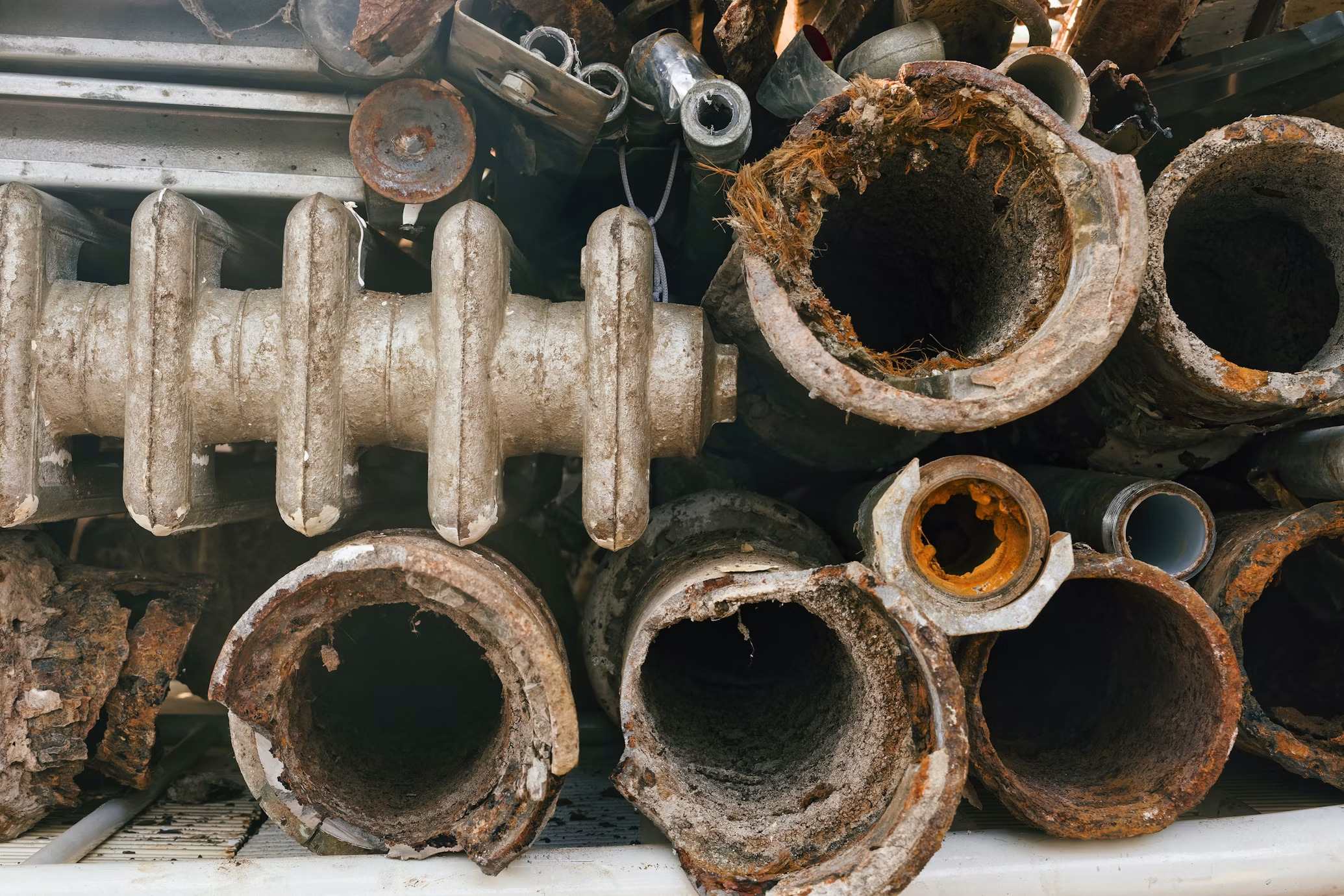
- Expect the Pre-existing Defect Defence: The council will almost certainly argue that their tree did not break a sound pipe, but simply responded to an existing leak in your terracotta pipes.
When Councils Do Pay: A council may accept a claim or reimburse repair costs if you can prove you formally notified them of the issue prior, and they failed to maintain the tree, or if the tree root physically crushed a structurally sound pipe on council land.
Sydney Water's Side
Sydney Water is responsible for the public wastewater network, including the sewer mains and other infrastructure it owns and operates. If a blockage, collapsed section or other defect is found within a Sydney Water sewer main, the issue may fall under Sydney Water's responsibility rather than the property owner's. However, the location of the pipe alone does not determine ownership. A private sewer connection can run beyond the house or across private land before joining the public network, so you need to establish exactly which section of the sewer is affected.
If responsibility is unclear, evidence can help establish where the problem sits. A CCTV drain inspection can identify the location of a blockage, tree root intrusion, collapsed pipe or other damage and provide footage of the affected section. Drainage plans, sewer connection information and other property records can also help confirm where the private sewer connects to Sydney Water's network. For a clearer explanation of the different sections of a wastewater system, see our guide to who owns your drain.
Strata and Rentals
Common property sewer pipes in a strata scheme are the shared lines that drain multiple lots; they are the owners corporation's responsibility, not the individual lot owner's. A tree in the common garden causing root intrusion into common property sewer pipes is a strata maintenance issue. For specialised assistance, consult a strata plumber in Sydney.
For rentals: tree root damage to sewer pipes falls to the landlord unless the tenant planted the tree that caused it. Roots growing into aged terracotta pipes from an established garden tree are a maintenance issue with the property, not something a tenant is responsible for. Real estate managers often rely on a dedicated real estate plumber in Sydney to resolve these issues quickly.
Does Insurance Cover Tree Root Damage?
Insurance treatment depends on the policy and the way the damage occurred. Gradual deterioration, wear and tear, poor maintenance and damage associated with ageing sewer pipes are commonly excluded. A sudden escape of water or another insured event may be treated differently, depending on the policy.
This is where CCTV inspections become particularly useful. An insurer or assessor can look at the CCTV report to understand the extent of the damage, the condition of the pipes, and whether the roots entered through an existing defect.
Keep the original CCTV footage, plumber's report, photographs and invoices. Your insurer may ask for this evidence when assessing a claim. For a detailed inspection before you make a claim, see our CCTV camera pipe inspections.
Quick reference: Six Scenarios
When tree roots invade plumbing systems, responsibility depends on pipe location, tree location, and utility guidelines.
Scenario
Who typically pays?
Evidence you need
My tree, my pipe
The property owner
CCTV footage, plumber's report and repair quote
Neighbour's tree roots
Usually the private pipe owner initially
CCTV, evidence of tree root intrusion, damage report and relevant communication
Council trees
Usually the private pipe owner initially; a claim may be possible in specific circumstances
CCTV, invoices, photos and council correspondence
Sydney Water's line
Sydney Water where the affected infrastructure is its responsibility
Location of the defect and confirmation of the relevant connection point
Strata common tree/pipe
Potentially the owners corporation, depending on ownership
Strata plans, CCTV and plumber's report
Rental property
Generally the landlord for building/plumbing infrastructure
CCTV, plumber's report and notification to the property manager
The word “typically” matters here. Ownership, pipe location, the condition of the infrastructure and the cause of the damage can all change the outcome.
Frequently Asked Questions
Can I make my neighbour remove their tree?
Not simply because its roots have reached your sewer. If the tree is causing actionable damage or nuisance, you may have legal options, but the appropriate remedy depends on the circumstances. Legal Aid NSW recommends trying to resolve tree disputes with the neighbour first and obtaining evidence of the damage.
Can I cut roots at my boundary?
Generally, roots encroaching onto your side of the property boundary can potentially be dealt with, but you should take care not to damage or destabilise the tree. Local council rules may also apply, particularly to protected trees. Don't enter your neighbour's property to carry out the work without permission.
Will council pay for my blocked sewer?
Not automatically. If council trees are involved, report the problem to the council and keep your CCTV drain inspection, plumber's report and invoices. Whether the council is responsible or not will depend on the circumstances and the evidence of damage caused.
Who pays in a strata unit?
It depends on whether the affected pipes are part of your lot or common property. The strata plan and the physical location of the sewer line can help establish who has responsibility for the repair.
Drain Problem Checker
Not sure whether you're dealing with a simple maintenance issue, root intrusion, or pipe damage? Our drain problem checker can help you understand the symptoms and understand the next steps.
A CCTV inspection can help determine what is happening underground before you spend money on the wrong fix. The footage can identify the location, condition and extent of the problem so you can make a more informed decision about the next step.
Have a blocked drain or suspect tree roots? Get the problem checked before assuming who is responsible.