Tree Root Removal From Drains in Sydney
★ 4.9 from 489 Google reviews · Free CCTV inspection · From $400/m · Most jobs done in a day

Very professional, easy to communicate with, and excellent finishes. Would happily use Sewer Surgeon again for any waterproofing, roofing, plumbing, carpentry, and building works.

What's actually wrong with your drain?
Four quick questions. Likely cause, how urgent it is and what to do next. Free, about a minute, no details needed.
Expert Tree Root Removal Solutions
Tree root intrusion can cause slow drains, blocked drains and sewer backups and lead to a major disruption in your household in Sydney. If your property has cracked pipes or structurally weak joints, or there are plants near the drainage system, roots often find a way into damaged drain pipes. If you need tree root removal in Sydney, contact us.
First, we find where the roots have entered through CCTV inspection, understand the extent of damage and recommend an appropriate solution. Depending on the extent of damage, we suggest solutions like eel, sewer jetting, or robotic cutting.

How Roots Get Into Drains
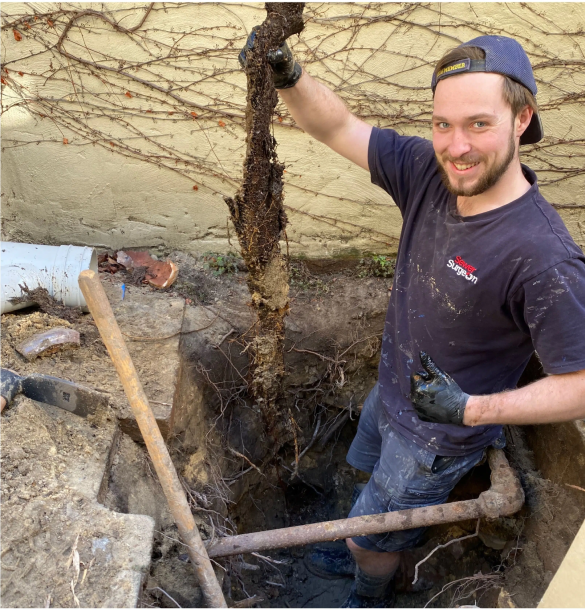
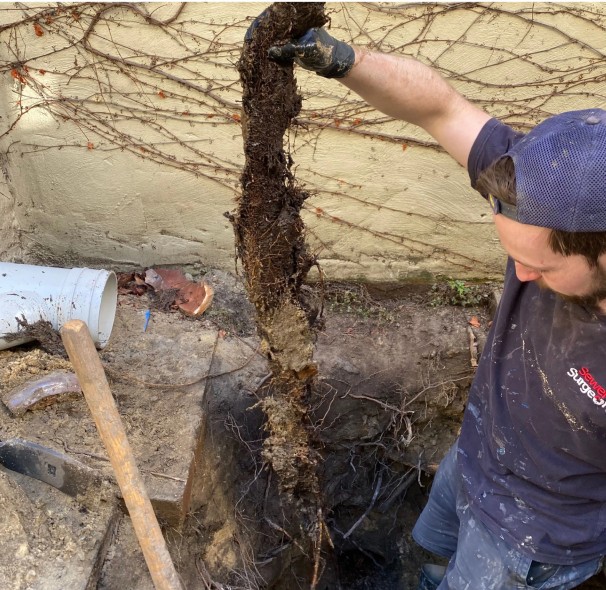
If a drain pipe has a tiny crack or a loose joint, water can escape into the surrounding soil and attract nearby roots and roots can penetrate small cracks and enter the pipe. Tree roots are primarily looking for water and nutrients. Once inside, they keep growing towards moisture and can form a large root mass. This catches more debris and waste and slows the flow of water.
Even a small amount of water leaking from an old pipe can attract nearby roots. The root hair can enter through small cracks and gaps. As the roots grow inside the pipe, they can catch toilet paper, grease, dirt and other organic matter and create recurring blockages.
Older clay pipes are more likely to develop cracks and loose joints as they age, while PVC pipes are less likely to have this problem when they are in good condition. However, roots can still enter if the pipe or a joint becomes damaged by chance and develops cracks. Sydney has dense residential areas with mature trees nearby. Some properties also have earthenware or iron pipes with cracks, which makes it easy for the roots to enter.
Roots thrive particularly when they find a steady source of moisture. Once they find an entry point into a sewer pipe, they can easily continue growing inside it. A tiny crack or loose pipe joint often seems like a small problem at first, but it can eventually lead to repeated blockages in the long run.
Signs It’s Roots, Not Just A Blockage
A drain that keeps blocking may have tree roots growing inside the pipe. These are some of the common signs to look out for:
The same drain keeps blocking
Even after clearing it, the blockage keeps coming back after a while.
Water drains slowly
Sinks, showers or floor drains take longer than usual to empty.
You hear gurgling
The drain makes bubbling or gurgling sounds when water is running.
Unpleasant smell
You may notice an unpleasant smell coming from the drain.
Water backs up
Water flowing back through a sink, shower or floor drain is another sign.
More than one drain is slow
When several drains are showing signs of slow drainage at the same time, the blockage might be caused by tree roots.
Why Inner West Homes Can Be More Affected
Old drainage system
Inner West Sydney has Federation-era homes with older drainage system clay pipes. These pipes can develop small cracks or loose joints because of the lack of maintenance, making it easy for tree roots to enter. New houses might also face the same thing if they have cracked pipes.
Dense residential complex
Many homes are in close proximity to mature trees with spreading roots. Naturally, roots have a tendency to grow near sewer lines, causing severe blockage.
Leaking pipes
Tree roots are naturally drawn to water. Due to this, a leaking sewer pipe can become an easy source of moisture for nearby roots. Once they find the pipe, roots can enter through a tiny crack and continue growing inside the sewer system.
Spreading roots
New trees can also cause problems as their root systems grow over time, especially when they are planted close to underground pipes. The tree may be small when it is planted, but its roots can spread much further as it becomes established.
How We Remove Them
We first use a CCTV inspection to check where the roots have entered, how much root growth is inside the pipe and whether the pipe is damaged or beyond repair. Once we know what is going on inside, we can choose the right way to clear the roots.
The method mainly depends on the extent of root growth and the degree of damage. For smaller roots, we may use an electric eel, while larger root growth may need high-pressure sewer jetting with root nozzles or robotic cutting. Our team gets into the root of the problem and recommends a solution that is suitable.
Electric Eel
An electric eel can cut through smaller roots and clear them from the drain. It is usually suitable when the root mass is not too dense and there is still enough space inside the pipe for the equipment to work. It has a rotating cable and cutting head that breaks through the blockage to restore the water flow. Though it has the capacity to cut through certain root blockages, some build-up might still remain in the pipes.
Sewer Jetting With Root Nozzles
Sewer jetting or hydro jetting Sydney uses high-pressure water to cut through roots using root nozzles, wash them out of the pipe and clear the blockage. The mechanism is simple but effective. The specialised nozzle is inserted into the damaged area of the pipe while the high-pressure jets work effectively on the root mass, break apart the blockage, and the reverse flow cleans the inside walls of the pipes thoroughly. The roots are flushed out and the water starts flowing normally. The water pressure can be controlled depending on the condition of the damage and the quality of the pipes. Earthenware or clay pipes might not be able to withstand high-pressure jetting.
Robotic Cutting
Robotic cutting is used when there is a large root mass or heavy root growth that needs to be cut out from inside the pipe. It is essentially a tiny cutting machine that is inserted into the damaged pipe with growth. The whole process is controlled by a technician outside through CCTV camera inspection and an air hose. This type of mechanical root cutting can be useful for severe blockages that are difficult to clear with an electric eel or sewer jetting. The robot cutting method is used to cut through a huge mass of tree roots and remove stubborn blockages without any excavation. However, it is not suitable for pipes which have collapsed completely.
Why Cutting Alone Doesn’t Last
Cutting the roots removes the blockage, but it is not a permanent solution. It breaks through tough root masses causing obstruction, but it does not always fix the reason the roots got inside the pipe. If there is still a tiny crack or loose pipe joint, new roots can enter through the same spot because the opening has not actually been repaired.
This means root cutting can sometimes be a temporary fix rather than a permanent repair. If the pipe has cracks or leaks, roots may return within 12–24 months, although the timing depends on the pipe, the tree and the amount of root growth around the damaged area.
If the same roots keep coming back, clearing them repeatedly can become costly. Finding and fixing the entry point may save money over time because you are dealing with the cause of the blockage instead of paying for the same process of temporary root removal again.
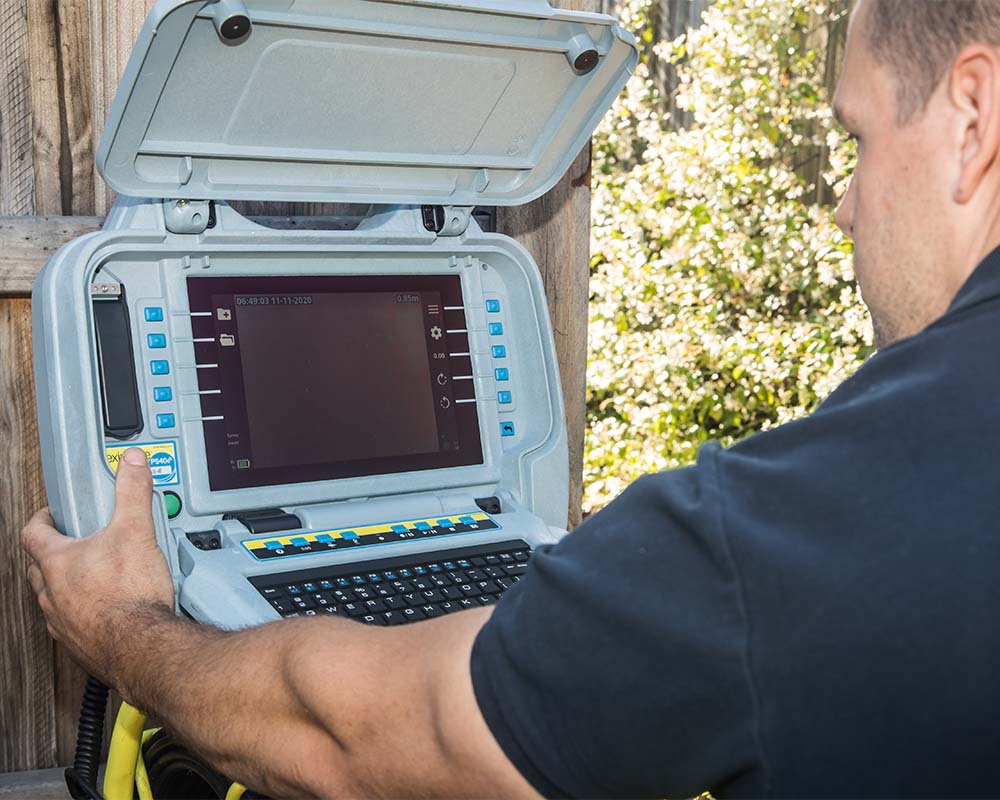
A CCTV inspection can show whether the pipe needs more than root removal. It can also help us check for cracked pipes, a broken pipe, loose joints or other damage that may need a permanent repair.
The Permanent Fix
If roots keep entering through the same damaged section, pipe relining Sydney may be an option. It repairs the inside of the existing pipe without needing to dig up the whole area, which can be useful when underground pipes run below gardens, driveways or floors. The process uses a synthetic liner that is placed inside the existing pipe and then cured in place. This creates a new pipe inside the old pipe and gives the inside surface a new layer that covers the gaps roots were using to get inside.
Modern composite resin technology allows the liner to cover suitable cracks and damaged joints. The result is a seamless pipe surface that closes the entry points where tree roots were getting into the sewer line.
Pipe relining is not suitable for every old pipe. If the pipe has collapsed badly, moved out of position or lost too much of its structural foundation, replacing it with a new pipe may be a suitable permanent solution.
A CCTV drain inspection helps us understand the condition of the pipe before recommending a permanent repair. This means the repair can be based on the actual plumbing problem rather than simply clearing the roots and waiting for them to return.
Who Is Responsible For Tree Roots In Pipes?
Responsibility for tree roots in pipes depends on where the affected section is located, who owns that part of the drainage system and the circumstances.
- If the root intrusion in your pipe is caused by trees planted by you, then it is your responsibility to pay for cleaning the roots.
- If the root intrusion in your pipe is caused by your neighbour’s tree, you can invest in cutting the roots initially without damaging the tree. You can bring it to your neighbour’s notice by writing to them about the root intrusion. Make sure you attach CCTV footage as evidence. If the neighbour refuses to address this issue, even after further damage, you can ask for a nuisance claim, provided you can prove his negligence despite knowing the issue in prior.
- If tree roots from Council Street have made their way to your pipes, you pay initially for the damage but report it to the local municipality along with CCTV footage. The Council might defend themselves, saying that the roots only made their way because your property had defective pipes with leaks. But they might reimburse you if the tree roots physically crash your pipes. If they haven’t addressed the issue and you have evidence of informing them before, your claim may seem legitimate.
- If the affected area of the pipe belongs to Sydney Water, it is their responsibility to pay for the damage.
- If it is a strata property and the tree roots have affected shared lines, the owners corporation has to pay for the damage. The individual lot owner does not have to take this responsibility. Check your strata plans and conditions.
- If it is a rental property, the landlord is responsible for the damage. The scenario might be different if the root intrusion is caused by a tree planted by the tenant.
Read our guide for a detailed explanation of responsibility and repairs.
Chemical Treatments
Chemical treatments are sometimes used to control root growth inside drains, mainly when the aim is to slow down new growth after the roots have been removed. They may help in some situations, but they do not repair a cracked pipe or close the entry point where the roots got inside.
Chemical foam can also be used to treat root growth inside some sewer pipes. It can reach parts of the root mass that remain inside the pipe, but it should not be treated as a permanent fix when there is still a crack or loose joint.
Rock salt is another treatment that is sometimes suggested for roots in drains. It does not repair damaged plumbing pipes or stop tree roots from entering through the same opening, so it should not be treated as a permanent solution.
If roots keep coming back, the important question is why they are getting inside the pipe. A CCTV inspection can show whether there is a crack, loose joint or another problem that needs to be repaired and help us recommend which is the best solution.
Root barriers can help manage root growth when planting new trees near underground services. They may help stop tree roots from reaching certain areas, but they cannot remove roots that are already inside a sewer line or repair a damaged pipe.

Tree Root Removal Cost
The cost of tree root removal is usually from $400 to $700. It usually depends mainly on the size of the root mass and where it is located inside the pipe. The condition of the pipe, how easy it is to access and the equipment needed to clear the roots can also affect the cost.
A smaller blockage may only need an electric eel or another basic root removal method, while a severe blockage may need high-pressure water jetting or robotic cutting. This is especially the case when there is a large root mass inside the pipe th.
The cost can also increase if the roots have damaged the pipe. If there are cracked pipes, a broken pipe or a damaged joint, you may need a permanent repair such as pipe relining or pipe replacement.
It is worth looking at the cause of the problem instead of only clearing the immediate blockage, and if the same roots keep returning, fixing the entry point may be a more cost-effective solution than paying for repeated plumbing services. We inspect the problem through CCTV inspection and give upfront estimates for tree removal methods, which is reflected in the final invoice.
Frequently Asked Questions
Will The Roots Come Back After Cutting?
Will Removing The Tree Fix The Drain?
How Long Does Relining Hold Against Roots?
What Is The Best Way To Clear Tree Roots?

Need Tree Root Removal In Sydney?
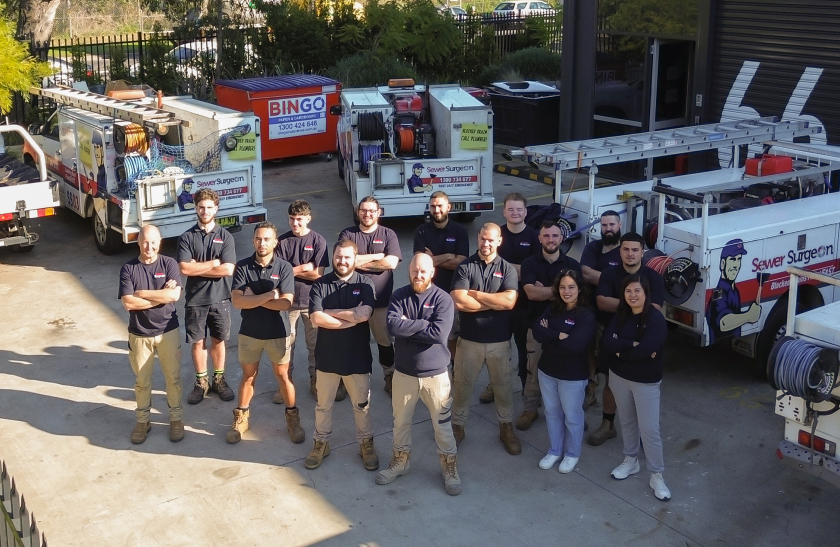
Recurring blocked drains should not always be treated as a simple blockage. If tree roots are causing repeated plumbing problems, our team can inspect the drain, clear the roots and explain whether further repair is needed. With 63 years of experience, we offer the best tailored solutions. If you need the best tree removal solutions for your pipes, call Sewer Surgeon on 1300 734 677 to discuss the problem and arrange a CCTV drain inspection.
